

Making Singapore's commercial buildings investable again.
THE POSSIBLE
Long-term greedy.
Short-term paranoid.
There is a kind of building that gets purchased, optimised for yield, and slowly starved of everything that made it worth occupying. The lobby dims. The coffee gets worse. The tenants leave.
We buy the other kind.
The Possible Capital is a Singapore-based real estate fund manager with a point of view: the best returns come from buildings that matter. Patient capital that believes doing good and doing well are not at odds—but deeply intertwined.
We acquire commercial assets caught between regulatory pressure and capital constraints—and transform them into places where people actually want to work. Green Mark Certified. Design-led. Experiential. Profitable.
The greed is in the ambition: compound returns over long holds, buildings that outlast cycles, value creation that doesn’t depend on timing the market. The paranoia is in the discipline: sweating the details, stress-testing the downside, never confusing optimism with diligence.
Purpose and profit. Sustainability and returns. Craft and commerciality. The industry treats these as trade-offs. We treat them as the investment thesis.
Our Conviction
Patient about time.
Impatient about standards.
Commercial real estate has always had a complicated relationship with beauty. Not the hostile relationship of the philistine—which at least has a coherent logic. Something more evasive: an acknowledgment that design matters, followed by the reliable discovery, when the budget gets tight, that it matters rather less than previously thought.
The lobby gets simplified. The ceiling comes down. The common areas shrink to the minimum that could still, in a forgiving light, be called common areas.
The model still works. For a while. The bill for this habit of mind is now arriving. It is arriving, as bills tend to, with interest.
We invest where that bill is being paid. And we invest with the understanding that design is not a cost centre. It never was.
i. Pillar
Purpose
Buildings that matter to the people who use them. Spaces designed for how work is becoming, not how it was.
ii. Pillar
Patience
Long holds. Sustainability-linked financing. Compound returns that require conviction, not quarterly performance anxiety.
iii. Pillar
Profit
Institutional-grade returns. The paradox isn’t doing well by doing good—it’s that so few investors seem to notice.
Our Buildings
Too small for REITs.
Too complex for rookies.

Singapore’s Green Building Masterplan is reshaping commercial real estate. Buildings that once traded on location alone now face a different question: can they meet the standards of a decarbonising economy?
Many cannot—at least not under their current ownership. Multi-generational families and small landlords often lack the capital or expertise for meaningful retrofit. Institutional investors won’t touch assets below their deployment threshold. The buildings sit in the gap.
That gap is exactly where an operator-led fund belongs.
We acquire these assets and apply a playbook we’ve refined over years of building and operating premium workspaces. Green certification. Thoughtful design. Tenants who stay because they want to, not because they’re locked in.
The buildings that understood this early are already compounding the advantage. They’re the ones with the waiting lists, the premium rents, the tenants who approach renewal as though they’ve considered the alternatives and found them wanting.
Our Impact
Returns with
a conscience and a spine.
Most investors underwrite buildings. We underwrite behaviour—how people actually use space in the new economy, and what that means for cashflows over a cycle.
AI will reshape corporate headcounts. It will not reshape the human desire for connection, collaboration, and craft. We target deliberately small-scale, experiential, hospitality-driven assets: spaces designed for what the office becomes, not what it was. Smaller teams. Higher-touch environments. Well-being at the heart of it. Human connection over headcount.
This is the structural demand shift we are underwriting.
Every building we acquire achieves Green Mark Gold or Platinum certification—the top tier of Singapore’s sustainability standard. We finance through sustainability-linked loans, reinvesting the interest savings into further decarbonisation. Government grants offset retrofit costs. Cap rates compress as institutional buyers—increasingly bound by ESG mandates—compete for certified assets.
The arithmetic of conscience, it turns out, is surprisingly attractive.
Founder
Jaelle Ang
I’ve spent my career in rooms where the spreadsheet and the space never quite spoke the same language.
I trained as an architect at the Bartlett (University College of London). I learned to look at buildings—how light falls, how people move, what makes a place worth being in. Then I went to Citibank and Credit Suisse and learned to look at deals—how capital flows, how risk compounds, what makes an investment worth making.
Neither perspective was wrong. Neither was complete.
In 2016, I founded The Great Room—a premium workspace company that grew to fifteen locations across Singapore, Hong Kong, Bangkok and Sydney. We were profitable through a pandemic that should have ended us. We exited to a US partner at a valuation that validated the thesis: design and experience aren’t costs to be optimised away. They’re the reason tenants stay.
What I learned: operators see what the spreadsheet misses. The ceiling height that costs nothing to preserve and everything to restore. The common area that looks like wasted space until it becomes the reason tenants renew. The details that compound.
The Possible Capital exists because I kept meeting buildings that deserved better owners—and owners who needed someone who understood both sides of the table.
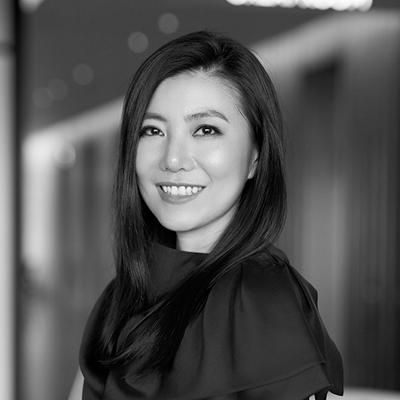
“With ignorance comes great courage. But with experience comes conviction. I’ve done this before—and I know what matters.”
partners
The people
who make it possible.
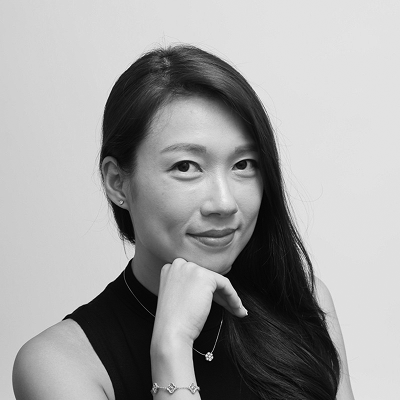
Jessica Li
Operator and dealmaker. At Industrious—the largest premium flexible workspace operator in the US—Jessica was part of the small team that closed their Series E and led international expansion across eight markets. Before that, she deployed capital at BV Investment Partners and cut her teeth in M&A at Barclays.
She leads investor relations, capital raising, and deal pipeline.
The person who gets things done—and makes sure the right people are in the room when it matters.
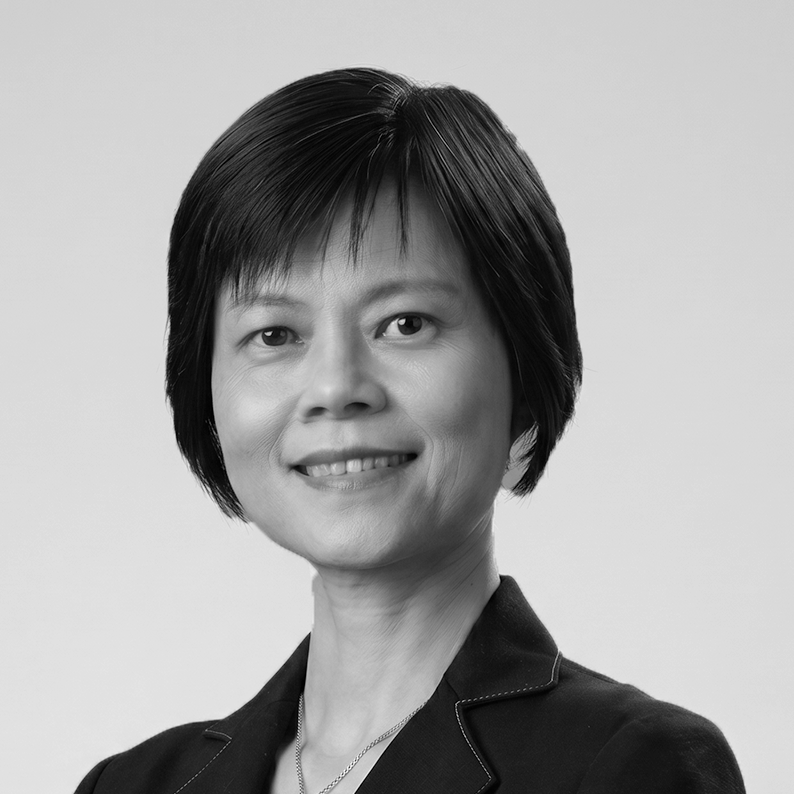
Chen Xia Ling
20 years’ international CFO experience with strong industry background in financial services and insurance; held financial leadership roles across diverse cultures with global institutions such as Allianz, AXA, Aviva; PE-funded Startup, Chinese enterprise and SME — builds a particular kind of judgement in risk controls.
Xia Ling oversees fund-level financial controls, LP reporting and compliance.
The person who ensures that when we say the numbers are right, they are.
Connect
Let's talk about
buildings that matter.
We’re raising our first fund—patient capital for Singapore’s commercial assets. Selective. Pre-launch. All conversations through the principals.
If you believe patient capital can do well by doing good, we should talk.
Jaelle Ang
jaelle.ang@thepossiblecapital.com
Jessica Li
jessica.li@thepossiblecapital.com